Wall Pilates: What You Actually Need
Wall Pilates needs very little gear: a clear wall, a mat, and later a small ball or a band if you want more challenge.
By Caro · Updated November 15, 2026
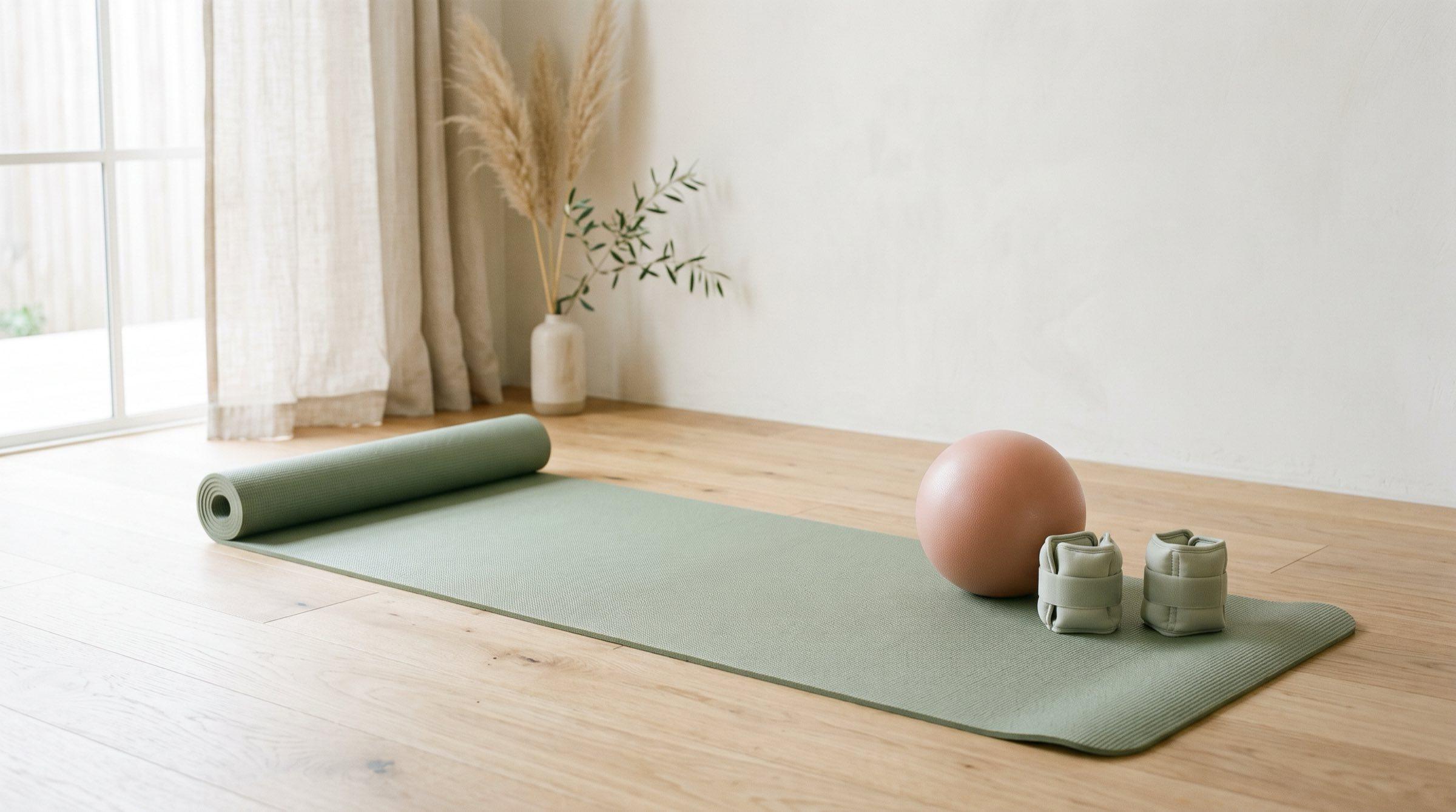
All you truly need is a wall. A good mat makes it comfortable; a small ball and a set of fabric bands are the only add-ons worth buying once the basics feel easy.
- ~$29SeeGaiam Premium Yoga Mat, 6mmOur pickCushioned for floor work, 22,000+ reviews
- ~$16SeeProBody 9" Pilates BallSmall ball for core and inner-thigh work
- ~$20SeeFabric Resistance Bands (3-pack)Light, medium, heavy loops for glutes and legs
- ~$23SeeBala Bangles, 1 lb (set of 2)Optional, once the basics feel easy
Some links are affiliate links: we may earn a commission, at no extra cost to you. How this works
Wall Pilates became a social media trend because it promises a Pilates-style workout with no machine at all. The equipment list really is short. WeightWatchers' beginner guide, reviewed by an exercise scientist, says wall Pilates "uses no equipment": "The wall itself and your own body weight provide the resistance."
So before buying anything, here's the honest order of priorities. These picks are based on the listings, ratings and verified reviews, not a hands-on test.
1. A clear wall
Find a stretch of wall with nothing hanging on it and enough floor in front to lie down with your legs up. Bare feet work on the wall; on a smooth floor, grip socks help your feet stay put in standing moves.
2. A mat for your back
Most wall Pilates moves are done lying on your back with your feet on the wall, so a cushioned mat makes the biggest difference to comfort. A 6mm mat is thick enough for your spine and hips on a hard floor. The Gaiam Premium mat is rated 4.7 stars from more than 22,000 reviews on Amazon.
Gaiam Premium Yoga Mat, 6mm
Cushioned 6mm mat, 4.7 stars from 22,000+ reviews
~$29
3. Later: a small Pilates ball
Once the basic moves feel easy, a 9-inch ball adds challenge: squeezed between the knees for bridges, or under the lower back for core work. The ProBody ball is rated 4.5 stars from more than 1,000 reviews and costs about $16.
ProBody 9" Pilates Ball
Small ball for core and inner-thigh work, 4.5 stars
~$16
4. Later: fabric resistance bands
A loop band around the thighs makes bridges, clamshells and leg lifts against the wall harder. Fabric bands are wider than thin latex ones, and this set is listed as non-slip and non-rolling. The three-pack covers light to heavy resistance, with 4.7 stars from more than 3,000 reviews.
Fabric Resistance Bands (3-pack)
Light, medium and heavy loops, 4.7 stars
~$20
What about weights?
Skip them at the start. WeightWatchers' guidance for beginners is direct: "Don't hold any weights." Master the form first, then add light ankle or wrist weights if you want more challenge.
When you get there, 1 lb is plenty for leg work against the wall. Bala Bangles are a popular wrist and ankle weight, rated 4.5 stars from more than 1,000 reviews.
Bala Bangles Wrist & Ankle Weights, 1 lb (set of 2)
Optional, for later; 4.5 stars from 1,000+ reviews
~$23
Keep expectations realistic
You'll see wall Pilates sold online with dramatic before-and-after promises. Like any Pilates, it's a good way to build strength and mobility, but it isn't a shortcut to a set result in a set number of days. If you're new to Pilates or have an injury, a few classes with an instructor will teach you the form first.
A wall, a mat and your body weight. Everything else is optional, and can wait until the basics feel easy.
Keep reading
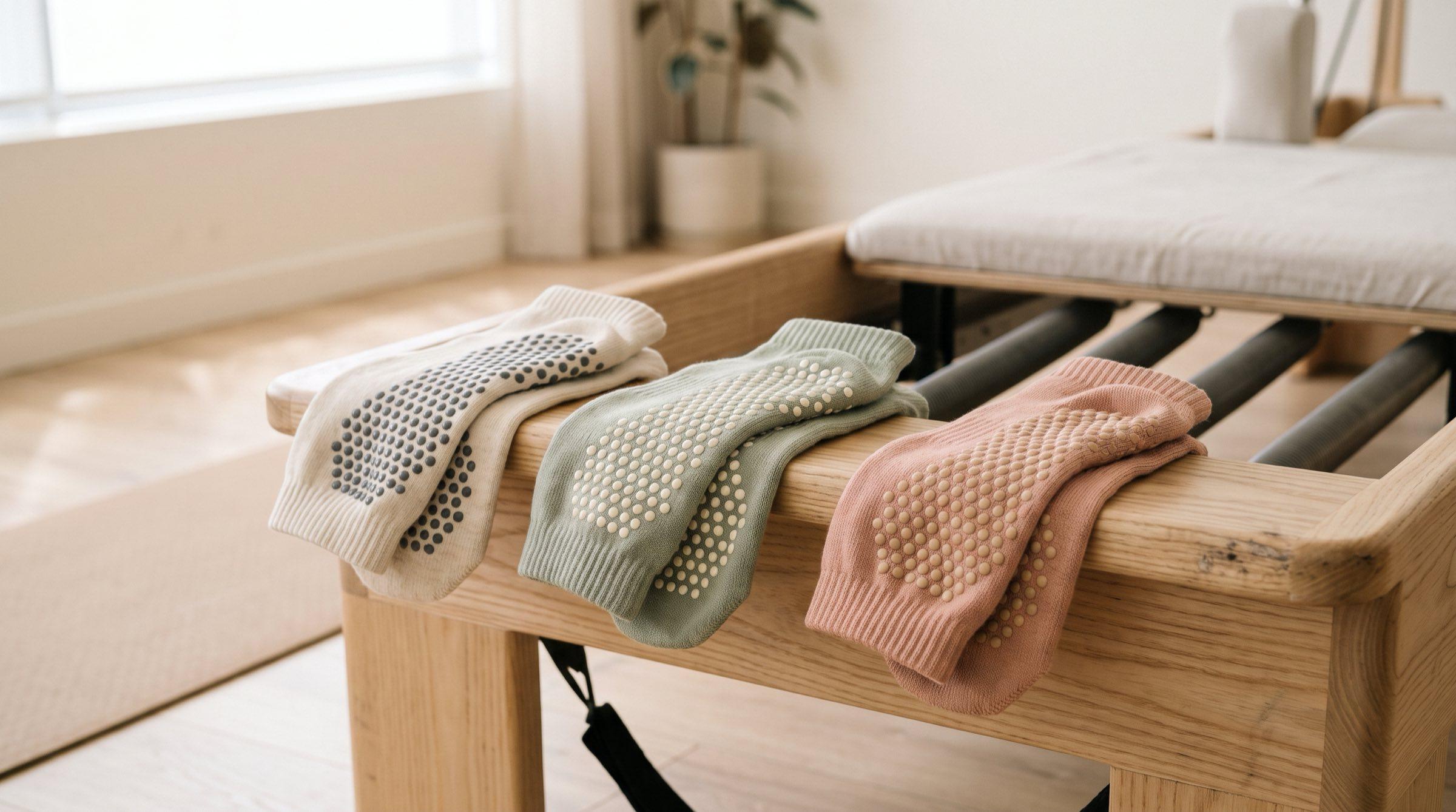
Best Pilates Grip Socks: Amazon vs Tavi vs Alo
Most reformer studios require grip socks. A $10 Amazon two-pack does the job, and Tavi is the studio-style upgrade.
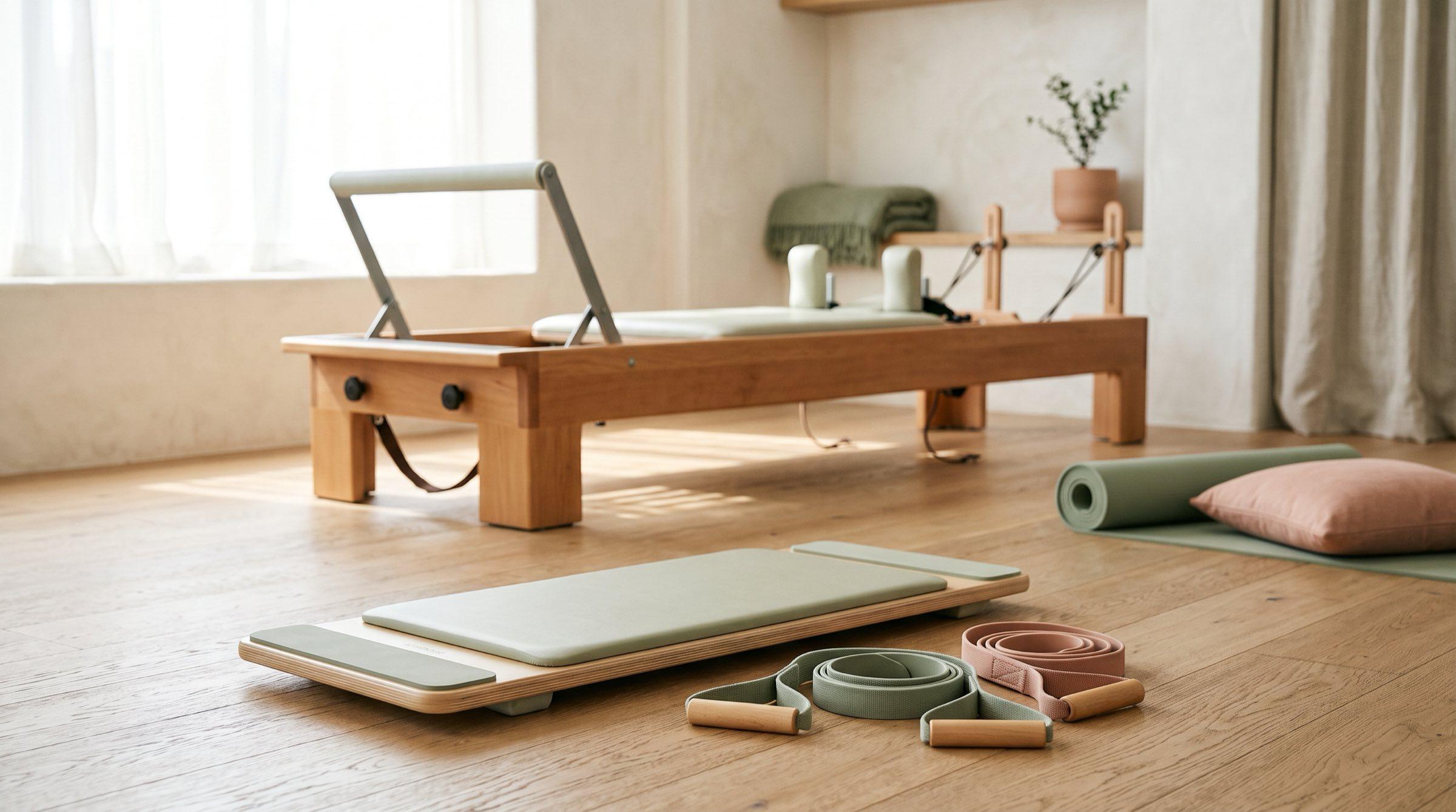
Pilates Board vs Reformer: Which One for Home?
A board is cheaper, smaller and easier to store. A reformer is closer to the studio. Which one makes sense depends on your space and how you train.